5 Engaging Chemical Weathering Activities for Middle School
Teaching chemical weathering in middle school can be challenging, especially when students struggle to visualize how rocks break down over time. Since many of these processes happen slowly in nature, the concepts can feel abstract and difficult to grasp.
That’s why incorporating hands-on and engaging activities is so important. When students can observe, interact, and make connections, they are much more likely to understand and retain the material.
If you’re looking for simple, effective ways to bring chemical weathering to life in your classroom, here are five engaging activities to try.
1. Hands-On Chemical Weathering Lab
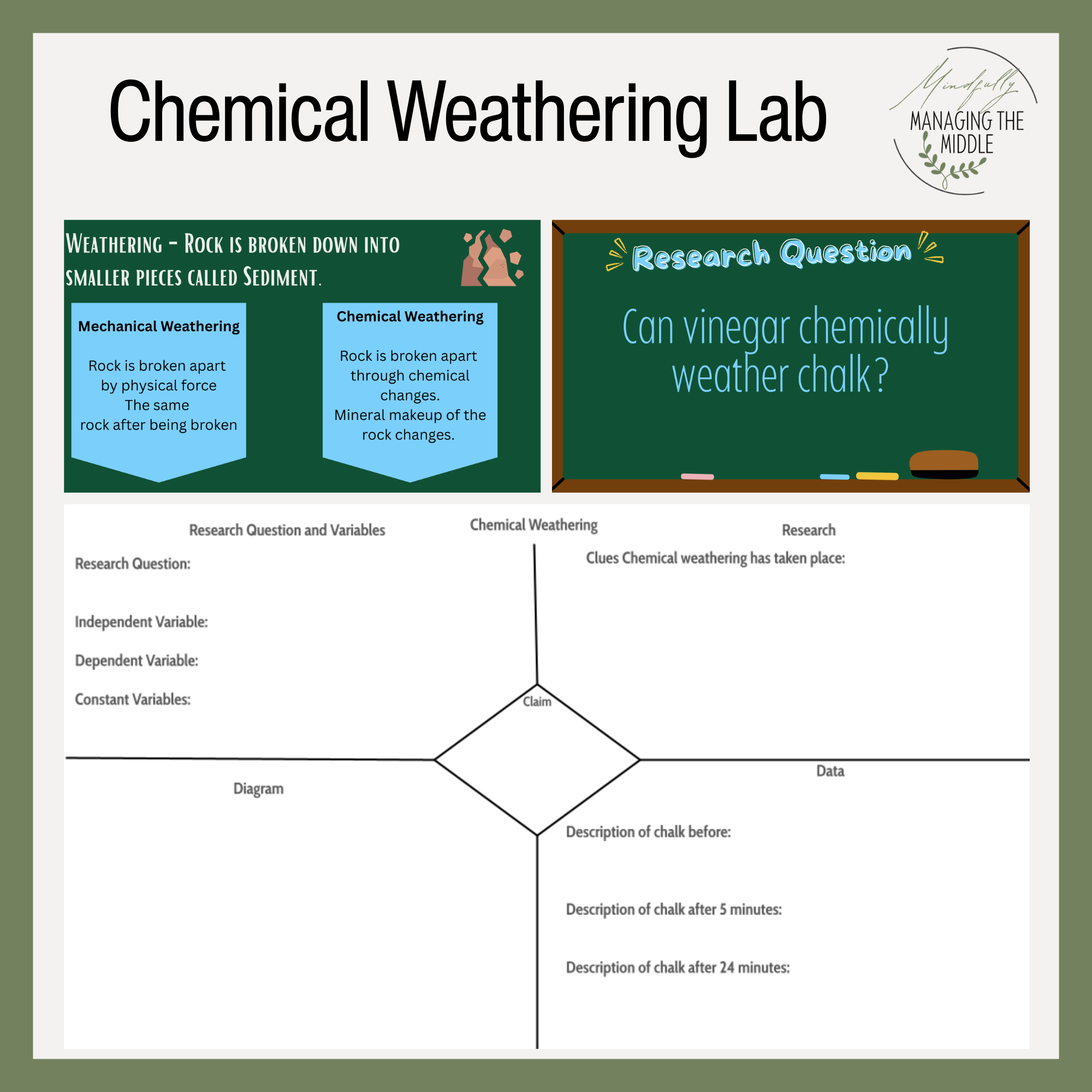
One of the most effective ways to teach chemical weathering is through a hands-on lab where students can observe chemical reactions in action.
In this type of activity, students explore how substances like water, acids, or other materials interact with rocks or minerals. They record observations, analyze results, and begin to understand how chemical weathering changes Earth’s surface over time.
If you’re short on prep time, I use a ready-to-go lab that walks students through the process step by step, making it easy to implement while still being highly engaging.
You can check out my Chemical Weathering Lab here:
CLICK HERE
2. Before-and-After Observation Activity
Give students images or samples showing rocks before and after weathering has occurred.
Have them:
identify visible changes
describe what might have caused those changes
connect observations to chemical processes
This helps students build critical thinking skills while reinforcing key concepts in a visual way.
3. Real-World Connections Discussion
Help students connect chemical weathering to the real world by exploring examples like:
statues or monuments wearing down over time
acid rain affecting buildings
natural rock formations changing shape
You can turn this into a short discussion, quick write, or even a think-pair-share activity. Making these real-world connections helps students see the relevance of what they’re learning.
4. Interactive Cornell Notes
Using structured notes, like Cornell notes, can help students organize their thinking and better understand complex topics like chemical weathering.
Students can:
define key terms
summarize processes
create questions for review
CLICK HERE to get a free copy of Cornell Notes I created covering both physical and chemical weathering.
5. Quick Exit Tickets for Reflection
At the end of your lesson, use a short exit ticket to check for understanding.
You might ask:
What is chemical weathering?
What is one example you learned today?
How does chemical weathering change rocks?
This gives you immediate feedback and helps reinforce key ideas before students leave class.
Teaching chemical weathering doesn’t have to feel overwhelming or abstract. By incorporating hands-on labs, visual examples, and simple reflection strategies, you can make these concepts more engaging and meaningful for your students.
If you’re looking for a low-prep way to bring this topic to life, don’t forget to check out the lab activity linked above—it’s designed to save you time while keeping students actively involved in their learning.
If you found these ideas helpful, be sure to save this post for later or share it with another middle school teacher!
