How to Teach Relative Dating So Middle School Students Actually Understand It
Teaching relative dating in middle school can be challenging. Concepts like superposition, crosscutting relationships, and disturbances can feel abstract, and students often struggle to visualize how rock layers form over time.
If you’ve ever felt like your students are memorizing terms without truly understanding them, you’re not alone.
The key to teaching relative dating effectively is making it visual, structured, and interactive. When students can see patterns, organize their thinking, and apply concepts step by step, their understanding improves significantly.
Here are some simple and effective strategies to help your students actually understand relative dating.
1. Start with Visual Examples
Before introducing vocabulary, show students clear visual examples of rock layers.
You can use:
diagrams of layered rock formations
simple sketches on the board
projected images
Ask guiding questions like:
Which layer do you think is the oldest?
What do you notice about the order of the layers?
This builds a foundation before introducing formal concepts.
2. Teach One Principle at a Time
Relative dating includes multiple principles, and introducing them all at once can overwhelm students.
Break it down into smaller steps:
Law of Superposition
Crosscutting Relationships
Disturbances or Faults
Focus on one concept at a time and give students opportunities to practice before moving on.
3. Use Structured Notes to Build Understanding
One of the most effective ways to help students organize these concepts is through structured note-taking.
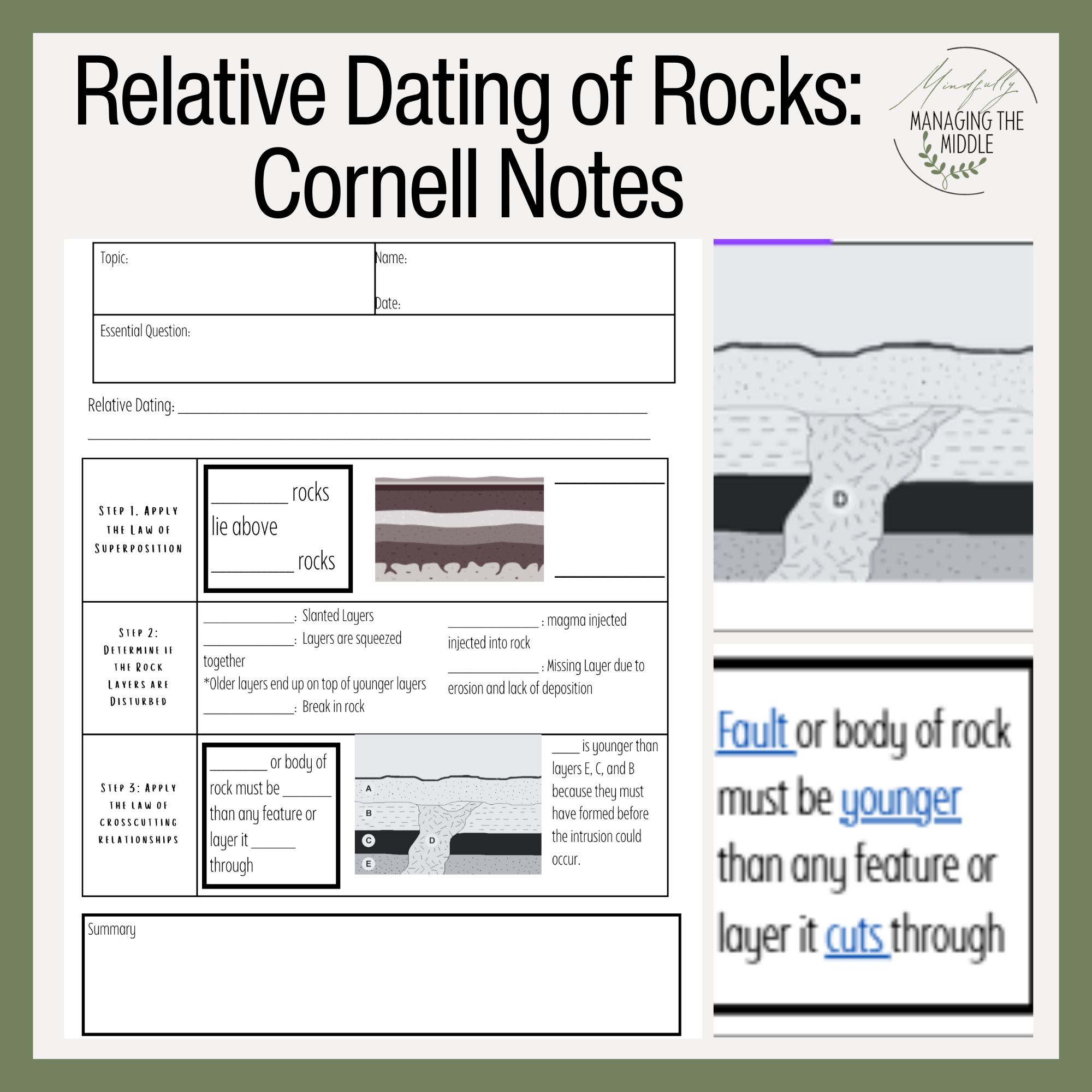
Using a format like Cornell notes allows students to:
define key terms
summarize concepts in their own words
create questions for review
This helps move students from memorization to actual understanding.
If you’re looking for a ready-to-use option, I use structured Cornell notes that guide students through each concept step by step.
You can find them here:
Relative Dating Cornell Notes
4. Practice with Simple Layering Activities
Once students understand the basics, give them opportunities to apply their knowledge.
Try:
ordering rock layers from oldest to youngest
identifying where a fault or intrusion occurred
explaining their reasoning
Start simple, then gradually increase complexity as their confidence grows.
5. Encourage Students to Explain Their Thinking
One of the best ways to check for understanding is to have students explain their reasoning.
You can ask:
How do you know which layer is oldest?
What evidence supports your answer?
This not only reinforces learning but also helps you identify misconceptions early.
6. Keep It Low Prep and Consistent
Teaching relative dating doesn’t have to be complicated or time-consuming.
Using consistent structures—like guided notes and repeatable activity formats—helps students focus on the content instead of adjusting to new instructions every time.
Low prep resources can also save you time while still keeping lessons engaging and effective.
Conclusion
Relative dating is one of those topics that can feel confusing at first, but with the right approach, students can build real understanding.
By using visuals, breaking concepts into steps, and giving students structured ways to organize their thinking, you can make this topic much more accessible.
If you’re looking for a simple, ready-to-use way to teach these concepts, be sure to check out the resource linked above—it’s designed to help students understand relative dating without overwhelming them.
Save this post for later or share it with another teacher looking for easier ways to teach earth science concepts!
